Showing posts with label theatre community. Show all posts

Jun 16, 2018

#myFITstory

A local theatre event here in Dallas called the Festival of Independent Theatres (FIT) is celebrating its 20th anniversary this year and FIT producer (and an old college classmate of mine) David Meglino reached out to ask me to contribute to a hashtag thread called #myFITstory. The aim is to collect various anecdotes and sound-bites about the FIT over the years from folks who have participated a lot. I will probably put something brief and pithy up on Facebook soon, but I started brainstorming last night about my experience with the FIT and it turned into a charming li'l trip down memory lane. Here's what came out...


I have really enjoyed participating in the FITs over the years. I first got involved when Brenda and Michael Galgan (of Beardsley Living Theatre and co-founders, along with David Fisher, of the FIT) suggested I apply in 2002. 

I did a show called MINT JULEPS back when Audacity was still Audacity Productions. That was the first time I got to work with the excellent Laurel Whitsett. Russell Dyer was my lighting designer for that show and David Fisher drafted him into the FIT production team after that. I then submitted something every couple of years. The next year, I produced Mac Wellman’s CLEVELAND in 2003 and introduced FIT audiences to a hungry up-and-coming actor named Jeff Swearingen (in the role of Panda Hands). 

Jeff Swearingen and Christie Beckham in CLEVELAND
I particularly enjoyed presenting my play FOR THE LOVE OF AN ANESTHESIOLOGIST back in 2004. It was the first play of mine that I presented to Dallas audiences and felt confident in calling myself a playwright after that. Sometimes I’d just be a producer behind-the-scenes like for Jaymes Gregory’s original GOSPEL OF THE JUNKYARD in 2005 (or his adaptation of THE GREAT DICTATOR in 2017) or the Jeff Hernandez-directed production of my own play ARSENIC & ROSES in 2009. 

Jeff Swearingen and Kenneth Fulenwider in FOR THE LOVE OF AN ANESTHESIOLOGIST

I even acted in the FIT, both on the secondary stage in the gallery (now down below in the old boat storage area under the building) and on the main stage. My comedy troupe Mild Deemntia played in the gallery when FIT was at its largest in 2004. I was in Jeffrey Schmidt and Lydia Mackay's Drama Club debut show, an adaptation of Strindberg's GHOST SONATA in 2008.
On the ground in Drama Club's GHOST SONATA

In 2013, I wrote/directed/produced/acted in my proudest FIT production. It was called DINOSAUR AND ROBOT STOP A TRAIN. I played a robot to Jeff Swearingen's goofy dinosaur. It was a blast.

Me and Jeff Swearngen in 2013's DINOSAUR AND ROBOT STOP A TRAIN
Besides the engaged and bountiful audiences, the best part has been the great artists I have met and worked with through the FIT. I have particularly liked seeing where they have gone after starting out at the FIT. Swearingen and I worked on-and-off for years on various projects. He went on to found his own theatre company. I met Matt and Kim Lyle of Bootstraps at he FIT. Years later I would commission Matt to write a play for Audacity (which became HELLO HUMAN FEMALE). Matt has gone on to have his plays produced at several high-tax-bracket theatres around Dallas. Russell, mentioned above, was an old college buddy of mine and now is the General Manager of the 749-seat Moody Performance Hall (formerly known as the Dallas City Performance Hall). David Fisher used to champion small, indie theatre groups at the Bath House Theatre Center, including Audacity in its earliest days. He used to run the BHCC where the FIT took place, and where he helped produce it, went on to be Director of the Dallas Office of Cultural Affairs for a while. David Meglino, who now produces the FIT, acted with me in GHOST SONATA.

I am glad the FIT has made it to 20. I hope it runs for 20 more years and continues to be a testing ground for new works and new groups in the Dallas cultural landscape.

#   #   #


Perhaps you would be interested in adding more excitement and romance, adventure and intrigue to your life. If that's the case, I don't know what to tell you. But I would suggest you subscribe to my newsletter. I mean, who knows? Life is full of surprises. I only send stuff out occassionally, but it is good stuff. Hit the button below...


Leave a comment. If you are a robot or a blatant marketer trolling Blogger, then you will be deleted. Humans only, please.


Dec 30, 2017

Looking Back at 2017

For the last several years I've been using this website as a kind of portfolio to collect together my creative projects (to be honest, that's pretty much the only point of this website). I have also been doing a little year-in-review deal over for a while (here's 201220132014, 2015, 2016). So, here’s what happened in 2017...


Most of 2017 was occupied with my new role as parent. My wife and I brought a beautiful baby boy into the world on December 30th of last year. Obviously, adapting to my new role as a dad took priority over any creative pursuits. So here's a slimmed down look at the handful of theatre and other artistic things I managed to fit in.

In February, I released my play Raspberry Fizz on Kindle. It is the final work in a trilogy of ebooks of short stage plays that I now have on Amazon. Perhaps someday I will collect them together into a paperback edition.


The bulk of the year was just being cozy and domestic. Not until the fall did I get back on the map, so to speak.

In early August I had two plays in the One-Minute Play Fest produced by Kitchen Dog Theater. I went to see them. They went over pretty favorably.

I took my show Robert's Eternal Goldfish to Fresno, California for a two show weekend at an event organized by my friend Grant. It was titled Seattle-to-Fresno Mini Fringe. I had an epic beard.


Me performing Robert's Eternal Goldfish in Fresno

In September, for my birthday, I started a podcast called the Cultivated Playwright. I released nine episodes over the rest of the year ranging from reflections on Sir Peter Hall, minimalism, Dan Harmon and improv comedy to how Thor Ragnarok fits Goethe's Three Questions of Criticism.


In December I participated in Nouveau 47 Theatre's A Very Nouveau Holiday (my fifth time in as many years). This time I had a ten-minute play about a bear that refuses to hibernate and instead works in a coffee shop. It was called Langdon, The Seasonal Barista. It went over very well.

Emily Faith, Robert Long and Monalisa Amidar in Langdon, The Seasonal Barista

I directed Langdon as well as Jonathan Kravetz's Mr. Crispy. Kravetz's play was a sci-fi tear-jerker that deals with a failed screenwriter endlessly reliving his final night with the song-writing friend he had an infatuation with, through the use of a mail-order robot. It had a great premise, but definitely was not in line with the current zeitgeist, with a controlling male protagonist who self-indulgently manipulates a "female" robot to replay one of his memories/fantasies over and over again. 

It was fun to get a chance to direct again, especially my own work.


Charles Ratcliff and Cameron Casey in Mr. Crispy

That's about it. 2017 was a slow year for the ole theatre career, but exciting in a larger sense. I love being a dad, though it has caused a great amount of reflection on where I want to go from here on out and what I genuinely want to accomplish. 2018 should, hopefully, be filled with more balance and more creative endeavors.


#   #   #

Perhaps you would be interested in adding more excitement and romance, adventure and intrigue to your life. If that's the case, I don't know what to tell you. But I would suggest you subscribe to my newsletter. I mean, who knows? Life is full of surprises. I only send stuff out occassionally, but it is good stuff. Hit the button below...


Leave a comment. If you are a robot or a blatant marketer trolling Blogger, then you will be deleted. Humans only, please.


Mar 15, 2015

We Live Here - Staged Reading

Playwright Zoe Kazan
I am acting in a Staged Reading of WE LIVE HERE by playwright Zoe Kazan. It is part of Echo Theatre Company's series Echo Reads (which is run by my friend Miller Pyke).

Here's the run-down:

Allie Bateman's wedding is Sunday. When Dinah, her precocious younger sister, returns to their parents' home for the festivities, she brings more than anyone expected: a new boyfriend, whose hidden history resurrects passions and painful memories for the whole family. Over one emotionally charged weekend, the Batemans find they must acknowledge and accept loss to gain hope for regeneration. 

Cast includes:


Kevin Keating - Lawrence
Nancy Smith Munger - Maggie
Miller Pyke - Althea
Devon Rose - Dinah
Brad McEntire - Sandy
Dan Schmoker - Daniel

Directed by Lisa Anne Haram.

Tuesday, March 17, 2015 at 7:30 pm
Bath House Cultural Center
521 East Lawther Drive, Dallas, Texas, 75218

FREE!

More info about Echo Reads... HERE.


Aug 28, 2014

The first Audacity Solo Salon

Van Quattro reading his work STANDING EIGHT COUNT
A lot of my theatre activities over the last several years nave narrowed on an interest in solo performance. I started a solo performance blog that touches on, admittedly, only a fraction of the solo performance happening around the nation. I developed and performed three distinct original solo pieces, including CHOP, which is probably the piece I am most proud of and which has proven most artistically fulfilling to date in my creative process. Last May I produced the first ever Dallas Solo Fest, a Fringe-like theatre festival bringing together local as well as national solo acts in a celebration of one-person shows.

Now I am extending this interest, and the ethos of the DSF, into a quarterly event, a sort of solo performance open mic/workshop series I am calling the Audacity Solo Salon.

The aim of the Audacity Solo Salon is to support and nurture both established and emerging solo performers in the north Texas area. It is also a way to extend the mission of the annual Dallas Solo Fest beyond just the festival itself. 
 
This will be a way for solo artists to rehearse, experiment and develop their work in front of supportive audiences. The Audacity Solo Salon it will serve as a collaborative gathering place so solo artists and their audiences can meet and inspire each other and help cultivate a growing community of solo performance in DFW.

This first Salon was on August 25, 2014 and featured local
DFW solo performers Van Quattro, Steven Young and Beth Bontley. It seemed to go pretty well, with about a dozen audience members. The solo artists all semmed to come away with some good feedback, too. 

Culture journalist Danielle Georgiou did a nice write-up on the Salon in the Dallas Observer... HERE. And you can see pics from the evening... HERE. And a bit of info... HERE and HERE, as well.

I'm aiming to do the next one on December 8, 2014.

The Elevator Project

AT&T Performing Arts Center
The huge AT&T Performing Arts Center in the Dallas Arts District is doing an experiment. They have opened their smaller spaces to several small arts groups (theatres, dance groups and storytellers) to each do one production in the venue during the 2014-2015 season. It is called the Elevator Project. I weighed in on this yesterday after an article about the project appeared in Art & Seek, a local arts and culture website.

Here's me quoting myself...
"In fact, I think it might be a fallacy to believe more mid-size and larger theatres would be good for Dallas. There are so many smaller groups percisely because there is room to operate, room to say something unique and audiences to appreciate what is said at the smaller end of the spectrum. Dallas seems to reward gumption, spark innovation and prides itself on fostering scrappy go-getters. And I would hazard to argue that there are no groups more scrappy than the 40-someodd theatre groups spread all around the Metroplex that do little shows for handfuls of audiences at a time.
Read my whole soapbox rant... HERE.


Aug 24, 2014

Helping Hands for Matt Tomlanovich

With Ms. Erin Sngleton who coordinated the fund-raiser

This past August 20-22 a benefit was held at the Margo Jones Theatre for my good friend and colleague Matt Tomlanovich. It was called Helping Hands and Hyena Haikus: A benefit for Matt Tomlanovich. I acted as emcee and we managed to raise about $6,500 over those three days.

Matt Tomlanovich has been in the hospital since April 3rd, 2014 as a result of a serious MRSA infection in his spinal cord. Since May 14 he has been in a facility receiving rehab and has been making good progress. Though (at the time that this is being written) there is hope that he will recover more use of his limbs, it is probable that he will be a quadriplegic. 

Assistive technology for quadriplegia can run anywhere from $18,000 to $400,000 so the financial goal set for this group is a very rough estimate of the cost of getting Matt the machines he would need in order to once again be creating and some additional funds for the practical costs incurred to his wife and two teenage sons during this difficult time.

Matt Tomlanovich... weird and wonderful dude.
Matt is a wonderful, weird, creative and caring guy. This infection kinda came outta nowwhere and blind-sided him and his family, and by extension, those of us around him. 

I encourage you to visit Matt's GoFundMe page and donate a few dollars. Every little bit helps.

Head... HERE.


Jul 25, 2014

Sundown's WE'VE DONE IT AGAIN: A Mixtape

I have a piece coming up in Sundown Collaborative Theatre's short works fest. It is called LIZARD BOY EATS A DORITO and it is exactly what it sounds like (hat tip of gratitude to my friend Phil Gonzales who had the original concept back when we were in college together). I believe it is being performed here by the delightfully odd Robert Linder. The evening will also include JON GOES TO MARS by my freind Jeff Hernandez (Hat tip to myself for the concept) and Ben Schroth's hilarious TYLER'S MOM featuring the brilliant Betty Milligan.

Sundown Collaborative Theatre presents…
“WE’VE DONE IT AGAIN”: A MIXTAPE
Sundown's 3rd Annual(ish) Short Works Festival
AUGUST 11-13 @ 8PM
MARGO JONES THEATRE IN FAIR PARK
1121 First Avenue, Dallas, TX 75210
AUGUST 16-17 @ 8PM
GREEN SPACE ARTS COLLECTIVE
529 Malone, Denton, TX 76201
We've Done it Again: A Mixtape will feature nine different works including solo acts, movement pieces, and new plays. Our eclectic mix of styles and moods means there is sure to be something to whet your appetite! You can see all nine works in one night, or come by on multiple nights.
Tickets are $10 general admission, $8 students/seniors.
Group prices are available; please contact us for more information.
To reserve tickets or pay in advance, call 940-220-9302 or email boxoffice@sundowntheatre.org. 

Jun 1, 2014

Method and Madness Playwriting Panel

Elle Verneé, Laura Lundgren Smith, me, Steven Young
During the panel discussion, I covered Kevin Kelly's "1000 True Fans"


Earlier this weekend, I had the opportunity to participate in a playwriting panel with the Denton Community Theatre's 3rd Annual Method and Madness Playwriting Competition and Festival at the PointBank Blackbox Theatre in Denton, Texas. I was in excellent company with fellow playwrights Elle Verneé, Steven Young and Laura L. Smith. Organized by the very energetic and enthusiastic Mandy Rausch, the panel turned out to be a lot of fun. 

What struck me was with four different playwrights in the stage, each of us had different goals, different working methods, different preferences and so on. There was practically no overlap between us as artists, but were all courteous and friendly and engaging as people. Just goes to show there are as many ways to do things as there are people out there to do them.

In fact, I think this was  a plus for the small audience listening. They were definitely exposed to multiple points of view.

Also, in the same weekend, my friend and colleague Tashina Richardson of Sundown Collaborative Theatre teamed up with Mandy to lead a Staged Reading Workshop. They used my early play Arsenic and Roses as the demo script. Hopefully someone got some pics.

Nov 22, 2013

Waiting for a New Godot or Working with Small-Batch Theatre


World premiere production of Waiting for Godot:
Pierre Latour (Estragon), Roger Blin (Pozzo), Lucien Raimbourg (Vladimir) and Jean Martin (Lucky) 

Samuel Beckett's En Attendant Godot debuted in January 1953, when it was performed at the short-lived Théâtre de Babylone in Paris.

En Attendant Godot (Waiting for Godot) almost never saw the light of day. It was rejected by thirty-five would-be theater directors before it was passed to Roger Blin by the playwright's wife, Suzanne.

For some, the manuscript was some kind of joke. For others it was a pile of steaming unplayable, incomprehensible nonsense. For other would-be backers, this Beckett fellow represented a swaggering newcomer who claimed to bring something new to the table. "Respectable" theatres in Paris at the time simply did not do experimental little plays like Godot.

Blin had just recently taken over the small 233-seat theatre from Jean-Marie Serreau. The venue had opened in May of 1952 and by December of that same year it hovered on bankruptcy. That's when Blin took over. Unfortunately, by September of 1954, less than two years later the venue would close due to financial difficulties.

There were no famous names or big funders to back the play. Instead the whole thing depended on the actor/ director Roger Blin to hustle for cash and a venue - and once it had opened it relied on word of mouth for survival.

The Théâtre de Babylone was one of the fabled pocket theatres of post-war Paris. Small, progressive venues that ran on shoe-string budgets and were adventurous and intellectual. The Théâtre de Babylone had been the offices of a magazine previous to its short life as a more or less, makeshift, theatre facility.

This concept of small "pocket" theatre is not dead. Nowadays, it goes by several names: boutique theatre, micro-theatre, indie theatre, or my own preference... small-batch theatre.

The boutique moniker is interesting in its connotations. These days, if you want to position your offering as small, exclusive, fashionable and up-market, all you need to do is append 'boutique' to its description. We have clothing boutiques, boutique hotels and even boutique wine stores. Art galleries have understood the appeal for decades. But we're also seeing the emergence of the boutique theatre, an intimate performance space, seating between 40 and 150 people, often located in a nontraditional, converted or informal setting.

Though boutique theatre sounds so much more genteel and refined, these little venues are not necessarily all high-end or schmancy. Most are quaint, quirky, trendy or even a little bit strange (think the living room vibe of Dixon Place in NYC).

What these pocket-sized performance places have in common is that they provide alternative spaces for artists and shows that don’t fit into the mainstream cookie-cutter mold.

Contemporary pocket theatres are also important incubators for new talent. They serve as space in which to test, refine and debut new work, particularly experimental, adventurous and boundary-breaking productions. And this scrappy "under dog" approach may be exactly what theatre needs to survive and maybe even move forward in contemporary America.

The downside of such small venues is that often they can seldom afford to sustain long runs — a week or two at most. This means that word of mouth seldom has time to kick in. Plus, it is easy to write off these small theatres. Because these intimate venues do away with pomp and ceremony and let the spotlight fall on live, original performance and a memorable all-round theatre experience, they can be targeted, in rather smug uninformed ways, as places where no real "serious" theatre is going on.

Small is also sometimes code for amateur. Community theatres are "small." For somethong to be percieved as professional, shouldn't it be in a large downtown venue with pay-to-park lots and big ticket prices? This is especially true in Dallas, where the emphasis is on new and novel, big and bold. Dallas is a hard place for small things.

The Margo Jones Theatre at the Magnolia Longue in Fair Park, Dallas TX.

I am interested in this sort of thing because my small company Audacity recently moved into a new home base venue in Dallas. We, along with a few other tiny companies, share the Margo Jones Theatre inside the Magnolia Lounge at Fair Park. It has quite a history. Besides the several companies involved with keeping the facility up and operational, it is currently rented out to pretty much any one on a a first-come-first-served basis. And at an incredibly affordable rate. This is to say, it is incredibly uncurated.

What this means is that many different groups and individuals pass through the space. Some have more respect for the venue than others and those of us helping with the venue are finding that we are constantly trying to get the space back into a presentable, neutral, useable fashion after every. single. production.

The guy who holds the lease and, for the most part, is there the most, mentioned to me the other day a list of improvements to the space that may be materializing next year. I said that was great and I looked forward to the space getting better and more user-friendly. I was tired of the messy, scattered, jumbled, unorganized wreck of a place the venue seemed to constantly teeter on. Because renters leave the space in a ramshackle condition after they move out and there is no time, or resources to clean before the next group comes in (remember, no one is PAID to facilitate the space), the theatre is in a constant state of mess. I guess renters assume SOMEONE will take care of how they trashed the space, or dispose of the unwanted set pieces left behind, or repair the small damages they have caused. But there is NO ONE designated to do this. What gets done at all is done by the generosity of the artists helping to facilitate the space. The audience is, of course, exposed to this ramshackle space. It gives all the productions in the space a shabby, cheap vibe. It's thrift-store/DIY aesthetic had started to work against the quality of the art in the space.

The guy looked at me and said, "Well, it's your space..."

And with that, I shut up. Apparently, I had been looking at the little 75-seat venue all wrong. I was complaining about a dilemma, with the same obliviousness as the renters, as if someone else was going to fix the problems and present the solution to me. But, if I wanted things to change, I was going to have to be one of the agents of that change. This is how I approached making my art. So, why would it be different when it comes to how and where that art is presented?

But what exactly did I want and need out of the Margo Jones Theatre?

I guess I am looking for a place where the next Waiting for Godot could happen. A clean, neutral, even quirky place to develop my projects, to do my theatre company's productions. A place that doesn't get in the way of the shows, but instead works in coordination with the art within its walls.

I do not want to manage or facilitate a performance space. This has been a defining decision up to this point in the history of Audacity. The company stays small and nimble. We have worked hard to keep the usual administrative things out of the way so we could simply be creating the shows. Things like outreach, constant fund-raising and spending time running a venue draw time and energy away from actually making theatre. I leave this stuff to institutions. This is one of the reasons Audacity has stayed so small and scrappy all these years. There is freedom in compactness. But...

Something has to change. As a venue run by committee (especially, a committe of artists) no one individual sees that day-to-day things are done. Everyone assumes someone else is taking care of things.The space at the Margo Jones Theatre needs attention. It needs some systems in place to make it user-friendly. And, I'm facing the fact that I'll need to be a part of it.

A welcoming and, more importantly, affordable performance space is a boon to Dallas. The Margo Jones Theatre could be the little pocket theatre where a new Waiting for Godot could happen. Or, as an artist-run entity, it could devolve into unorganized chaos. Or, the City could realize what is here in this little corner of Fair Park and swoop in and take it all away.

And if the Margo Jones Theatre ultimately ends up not to be that place, so be it. Audacity will move about as urban nomads until we find the pocket theatre we need.

For now, MJT has all the potential. We'll see what happens...


NOTE: (April 2, 2019) As of January 2019, the City of Dallas has allowed Fair Park to be privatized. The new key-holders are a group that includes the nonprofit Fair Park First and Spectra, a Comcast-owned food-and-entertainment company that manages 319 properties around the country. It is doubtful that the Margo Jones Theatre will stay an affordable venue for small arts groups.


Oct 31, 2013

Late Bloomers

Pablo Picasso (age 26) and Paul Cézanne (age 57)
I'm a late bloomer. I have come to most of my big realizations and guideposts in life (vocation, serious relationships, marriage, political awareness, owning appliances, etc.) relatively later than the norm. I'm okay with this. It is how I operate and I can do little to change it. The process usually just takes longer for me. I explore a lot, if something is important, before I get to any sort of destination.

(Don't get me wrong. I make arbitrary decisions sometimes, so a decision is made and things progress forward... I hate the "well, where do you want to eat..." conversation with a searing sun-hot intensity.)


As for my creative endeavors, I have after 20 years in the theatre just come into my own since maybe 2009/2010. I wrote plays for over 12 years before I finally found my "voice" (and am still finding it). When I create now, I put my name on everything. These days I have purpose and pride in what I do. Everything that I do. Leading up to this point, I was pretty hit or miss. That is as it should be. Theatre, in particular, is a public art. You have to do it, live for an audience, in order to get better at it. 


And though I feel creatively successful, finally, I am by no means successful with my art in the marketplace yet. I am not known.


I will be. I have faith in that. But I know it is a process and I am just now at the point where I am confident in getting my work out there. I'm ready to market myself and what I do.


This late blooming is something I've struggled with. Some artists make a splash on the scene at a young age. They come out into the world seemingly fully formed. These sorts of artists, I believe, don't worry too much about if they will be successful, but just how successful.


In a New Yorker article by Malcolm Gladwell entitled Late Bloomers: Why do we equate genius with precocity? he cites two kinds of creative geniuses (as defined in David Galenson's study “Old Masters and Young Geniuses: The Two Life Cycles of Artistic Creativity.”).
.. conceptual and experimental.

He compares Cézanne and Picasso. Cézanne, though he started his artistic pursuits at roughly the same age as Picasso did, he didn't sell hardly anything until he was in his 50s. Picasso on the other hand, splashed on the scene in his late teens as a full fledged force of nature. Both had a major impact on art. One from the start. Another bloomed late.


Gladwell states:

The Cézannes of the world bloom late not as a result of some defect in character, or distraction, or lack of ambition, but because the kind of creativity that proceeds through trial and error necessarily takes a long time to come to fruition.
"Trial and error..." I like that.

And I relate to it. I don't feel like I had my art figured out early on (and even now, i still search), but I do feel like I've been on a journey through my process. I've tinkered and toyed with things and tried and failed and gone back to the lab so many times I've lost count.


The troubling thing is, while I go about the long exploration of figuring things out, I will appear to be nothing more than a small-time failed dilettante.


Here's how Gladwell puts it:

On the road to great achievement, the late bloomer will resemble a failure: while the late bloomer is revising and despairing and changing course and slashing canvases to ribbons after months or years, what he or she produces will look like the kind of thing produced by the artist who will never bloom at all. Prodigies are easy. They advertise their genius from the get-go. Late bloomers are hard. They require forbearance and blind faith. (Let’s just be thankful that Cézanne didn’t have a guidance counsellor in high school who looked at his primitive sketches and told him to try accounting.) Whenever we find a late bloomer, we can’t but wonder how many others like him or her we have thwarted because we prematurely judged their talents.
The whole article inspired me. Being just good right now means I can still be great later. Just gotta stick to it. I'm a late bloomer. And that's okay.

I'm in it for the long haul.


More articles about conceptual vs. experimental creators HERE and HERE.

Also Galeson's book is really thorough. Check it out... HERE


Oct 19, 2013

RUDNICK part of A VERY NOUVEAU HOLIDAY


My short play RUDNICK THE CANDLE-HEADED BOY will be included in an evening of holiday-themed one-acts by Nouveau 47 Theatre. I'm thrilled to be in such awesome company with the other playwrights involved and that my wife, Ruth, is one of the directors.

Playing December 13, 14, 19, 20, 21, 26, 27, 28 @ 8PM and 22 & 29 @ 2PM

At the Margo Jones Theatre at the Magnolia Lounge, Fair Park, 1121 First Avenue, Dallas TX 75210

More info HERE.

Jul 20, 2013

Being Part of the Cultural Community Means...


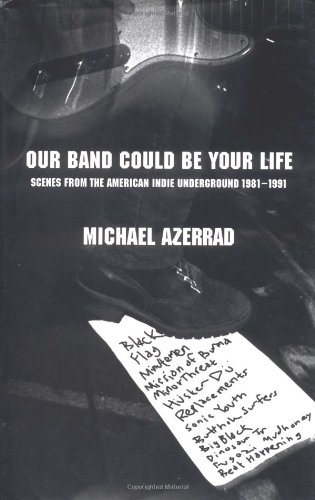
Austin Kleon has a recent post over on his excellent Tumblr that got me to thinking lately. The post is really a kind of book review of Michael Azerrad's Our Band Could Be Your Life: Scenes from the American Indie Underground 1981-1991. In particular Kleon commentates on and outlines some quotes from the book such as:
Sonic Youth was especially good at networking — Thurston Moore published a fanzine in which he profiled bands and musicians he wanted to connect with, they would figure out who the hot critics were and go schmooze with them at parties, and they would do everything they could to help out other bands, building up tons of good will. A lot of this was calculated, of course, but it also just was a natural outgrowth of the band members’ interests and curiosities. Here’s Lee Ranaldo:
"We’re all voracious acquirers of information, whether it be books or movies or whatever, we’re just really vastly into what’s going on in culture and trying to synthesize what’s going on. I think that was just a natural impetus, a natural tendency…
“A lot of bands are trying to present themselves as a singular entity in the center of it all. And I think we’ve always been the exact opposite, trying to present ourselves amidst a universe or a society of stuff going on.”
This makes me think of running a small theatre company. Being an indie theatre artist in a small theatre group is similar to being a musician in a small indie band. Ranaldo could be referring to how small theatre companies and the artists involved with them interact in the Dallas cultural landscape, and by extension, most large arts-intensive cities. 

A community forms because we are all interested in each other as artists. We share interests and passions. In fact, in regards to how we relate with one another, I would argue the people are more important than the work they make in an arts community. After all, a community is people, not the work/products of the people.

Here's how this works in a cultural landscape like Dallas. First off, there are around 50 or so theatres operating at any given time in the DFW area. Second, theatre-makers make horrible theatre-goers

But just because we don't see each other's work very often doesn't mean we are out of touch with the community. In fact, it could be argued theatre artists support each other far more than they support each other's work.

That said, Ranaldo's last statement above of "a lot of bands think of themselves as a singular entity in the center of it all..." is a perennial problem in the indie theatre community as well. Usually it is a small group, newly formed, that comes along, trying to stand alone thinking, "We'll do it better..." without really even knowing what has happened before in the area. I think this explains why so many theatre companies start with Beckett or Sarah Kane (or now, Annie Baker). 

The other way the singular entity problem shows up is when a the folks at a theatre think they are too big for those around them. They have either lasted longer (rare), had some recent minor success, or feel they are doing something far more important that what others are doing.

No one profits from the Singular Entity mentality.

Kleon's post about the book outlines more quotes that provide additional food-for-thought. I'll address them in upcoming posts.